
Paul Clerkin

Forum Replies Created
- AuthorPosts
Paul Clerkin
KeymasterLUKE GARDINER was the key player in the development of Georgian Dublin with Henrietta Street his first venture in the 1720s before moving on to what is now O’Connell Street and Mountjoy Square among others.
Now the houses he built at 15-16 Henrietta Street are set to be rejuvenated, three years after Dublin City Council ran an open design competition for the vacant site at 16 Henrietta Street, which was demolished some time around 1950 after being left derelict for about 25 years.
The 2008 competition attracted a total of 79 entries, and the winning design was by Ryan W Kennihan Architects. Dublin City Council, which owns the properties after acquiring them under the Derelict Sites Act, is now planning to construct a new four-storey over garden level extension to the building as well as a new theatre in the rear gardens of the houses.
Keymaster“Titanic Belfast building is just a shell, but already it’s awesome”
Stepping through the entrance gates of the old Harland and Wolff drawing offices the new Titanic Belfast building looms impressively above me.
The shiny aluminium shards which clad each of the four 90ft ‘hulls’ of the building glint in the sunlight, and as you walk closer you can see the different shapes which make each of them individual and give the impression of water glistening off the side of a boat as it cuts through the icy North Atlantic sea.
KeymasterNo.31 College Greenwas rebuilt in 1890 to the designs of Sir Thomas Drew and demolished in 1962.
[attachment=0:qcn1riyz]atkinsons.jpg[/attachment:qcn1riyz]
KeymasterAlso worth noting that the most recent copy of Dublin 1660-1860 features a photo sourced from archiseek as its cover…
Keymaster“The architecture of Ireland from the earliest times to 1880” was the first architecture history book I bought – way back as a school kid.
KeymasterThat was off the top of my head.
1892 – Designed by J. Howard Pentland as a parcels office. Pentland designed many postoffices for the Board of Works usin the same red brick and stone dressings.
A few other works by him – I probably have photos of others but unsure of architect to be definitive
https://archiseek.com/?s=J.+Howard+PentlandKeymasterFormer railway postal sorting office I believe – if you’re on the platforms at Connolly, you can see where it once had its own sidings. I seem to recall An Post selling it in the 1990s.
I got knocked off my bike right in front of it in 1992 by someone turning left and not looking.
May 5, 2011 at 6:35 pm in reply to: reorganisation and destruction of irish catholic churches #774593Keymastera little something for you traditionalists
http://www.designboom.com/weblog/cat/9/view/14227/axis-mundi-cathedral-fold.htmlKeymasterGrafton Architects Ltd & O’Mahony Pike Architects Ltd, have reportedly won this. No word if it actually will ever be built, or renderings yet.
KeymasterSome other photos taken recently


 Keymaster
Report of the original fire.
[attachment=0:38gmz65e]avanti20fire20kosz1.png[/attachment:38gmz65e]
KeymasterA selection of photos – http://leonotron.com/belcamp/belcamp.html
KeymasterYou mean this – apologies for image quality – taken a decade ago or more
Has that small institional feel for me. Don’t know anything about it either.
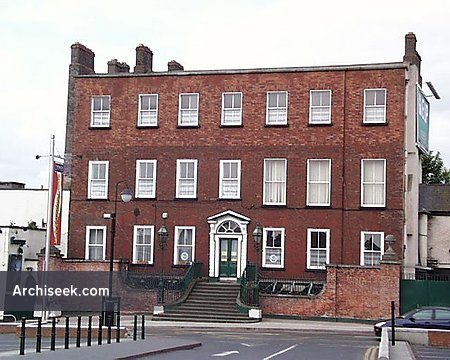 Keymaster
Added a poll – you can vote on the pages related.
KeymasterPublished today – the Henning Larsen concept
2011 – Design for National Concert Hall, Dublin by Henning Larsen
KeymasterVideo of scheme
http://youtu.be/DcxjPazFB2w
You have to watch it to hear the last couple of lines of voiceover – the hubrisApril 7, 2011 at 12:34 am in reply to: 1871: "architects of Ireland are not sufficiently united" #816766KeymasterThe Irish Builder has, it appears, a grievance against Irish medical officers of health in general, and those of Dublin in particular; and a special marked copy of our contemporary having been forwarded to us, we are, we presume, expected to reply or submit to judgment against us by default. We plead incapacity to answer, because having read the statement of the case by the Builder, we fail completely to comprehend its meaning. The Builder does our profession the distinguished honour of acknowledging that medical officers of health, when they are men of long experience, are a very useful class of public officials, but thinks “it will never be tolerated that medical men are to become directors-in-chief in all sanitary matters, including building construction, and that architects and engineers are to act as their clerks of works.”
The Builder also requires to know “how many doctors know the constituents of good mortar, and what are the properties of sand and lime comprising it.” From these quotations we derive the conception that our contemporary is jealous of the doctors. We hasten to reassure it. Irish medical officers of health have not the remotest ambition to undertake a larger field of duty than they have—being almost unpaid for that—and they gladly leave to the composition of bricks, mortar, and plaster— except sticking-plaster—to architects and engineers. In the absence of any circumstance which justifies the Builder’s complaint, it seems to us an unmeaning grumble.
1878 – Medical Press& Circular, April 24
KeymasterAgreed Graham… but back with that Centra – what’s with the horrible littl glass and steel (I hesitate to use the word awning) yoke over the shopfront? And it’s in the design too – what’s the architect thinking? 21st century version of Parisian metro entrances? Horrible little shopfront.
KeymasterSomething quick growing is needed – maybe some sort of vines and two clothes line poles at eiher end with a series of wires strung across for the vines to fill in
KeymasterThat’s the truth of it really – you can have the nicest spaces in the world but if there’s nothing happening, they’re just windswept barren areas. And in an Irish climate, no end of architectural intervention is going to make that space better used for 8 months of the year. Smithfield and Newmarket need to be turned back into markets – not just farmer’s markets but all sorts of goods, and not once a week – 4/5 days a week. They’d become a draw in themselves eventually.
- AuthorPosts


