
1906 – The Grain Exchange, Winnipeg, Manitoba
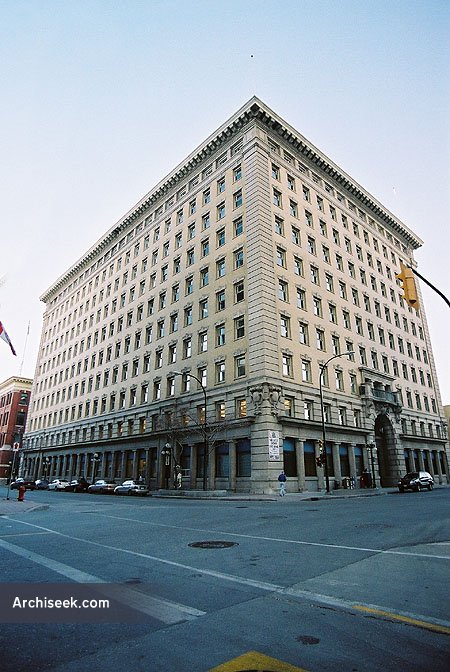

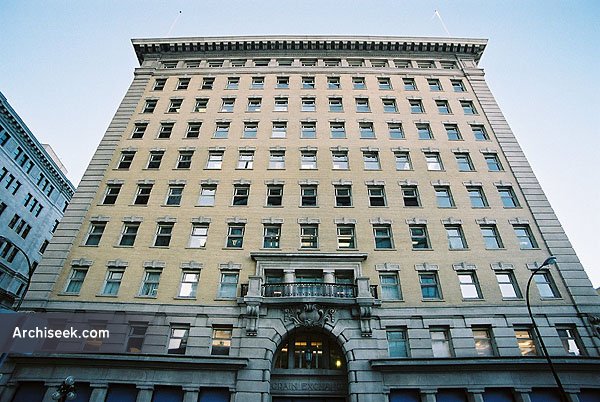

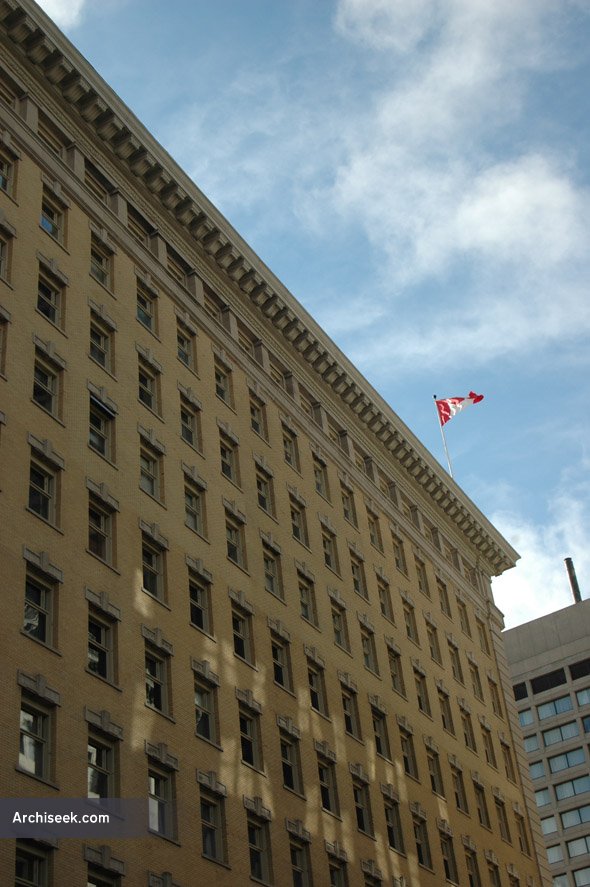
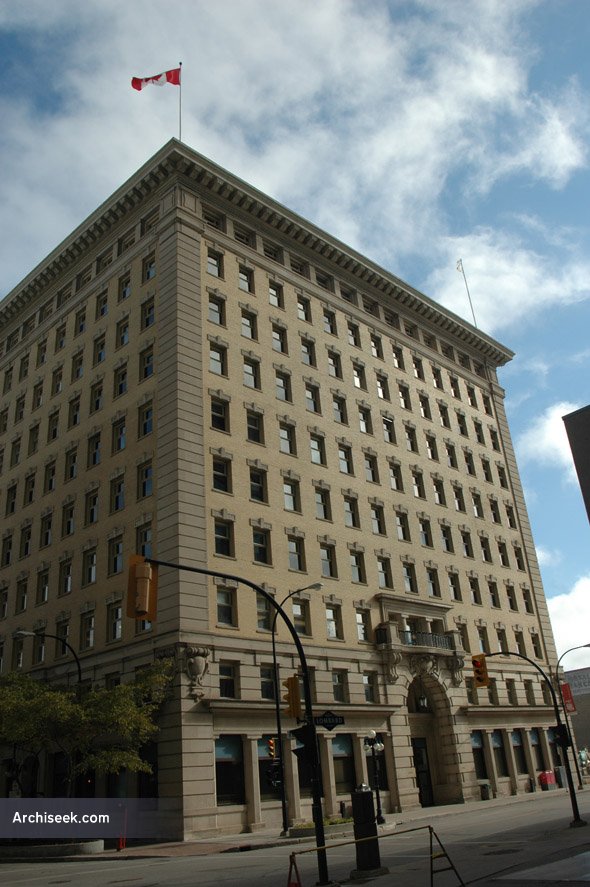
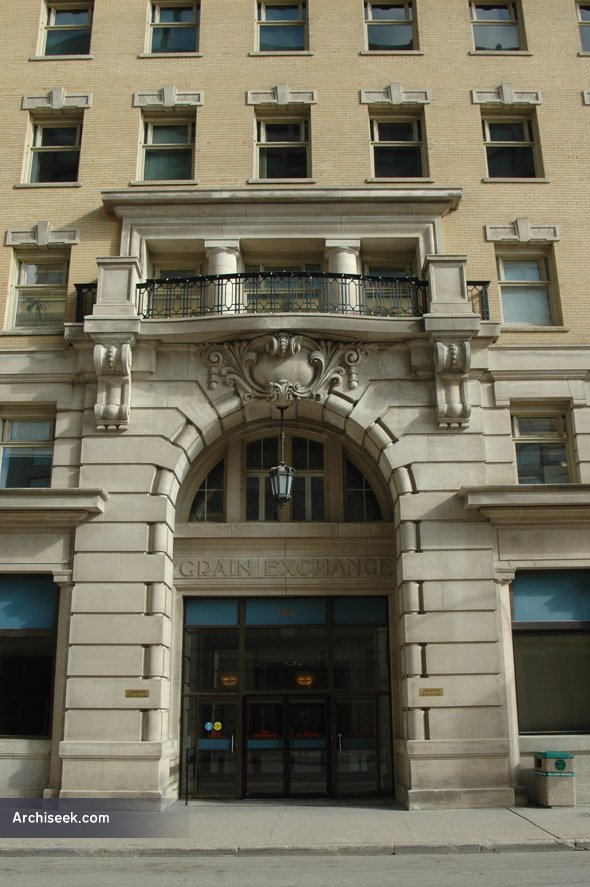
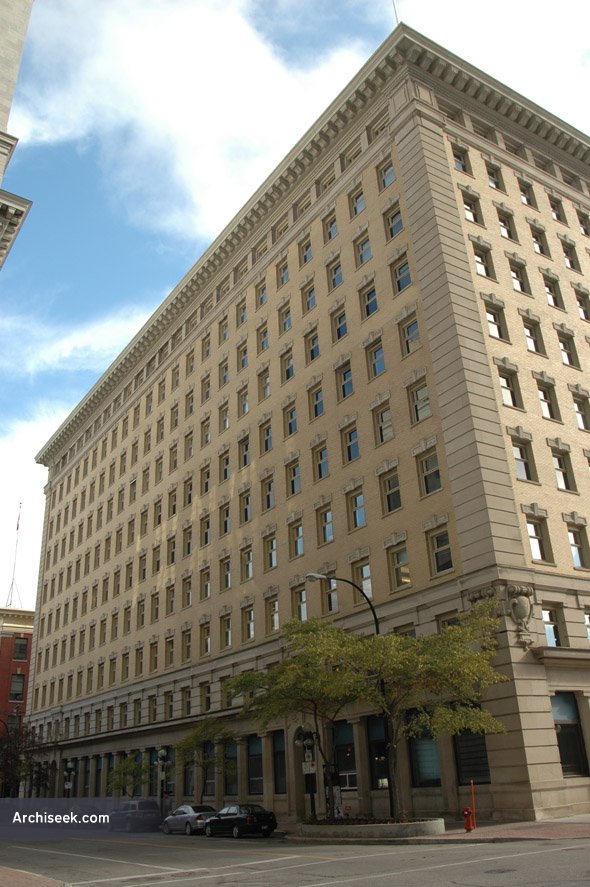


The center of commerce in The Exchange District, the Grain Exchange Building reflected the growth of Winnipeg at the turn of the century after the growth of the railroads. The original seven-storey building was designed by Canada’s foremost architects, Darling & Pearson of Toronto with subsequent additions by their Winnipeg associate, Jordan and Over. The structure features stone and terracotta details. A row of arched windows on the sixth floors shows the location of the two-storey trading room which has now been divided and houses the Chamber of Commerce. The building continues to be occupied by businesses involved in the grain industry.
The Grain Exchange is Winnipeg’s newest and best equipped fireproof office building. It was completed almost a year ago, and, in design and construction, is modern in every particular. It was designed by Messrs. Darling & Pearson.
The exterior walls are constructed of yellow pressed brick, with white stone trimmings and is constructed of steel and concrete throughout; has reinforced concrete floors and terra cotta partitions, and has hardwood finish interior throughout the entire structure.
It is fitted with four hydraulic elevators, and has its own lighting plant, which consists mainly of two 80 kilo, alternating generators, directly connected with high speed engines. The exhaust steam is used for heating purposes. Switches controlling the building’s private power, and also controlling the emergency power from the city’s plant, are located on one board.
Construction, December 1909
The Exchange was designed in the Sullivanesque Style, a variant of the Chicago School of architecture for tall, steel-framed commercial buildings. In the case of the Grain Exchange Building, the Sullivanesque form is combined with Italian Renaissance palazzo detailing. A Bedford stone base encompasses the structure’s ground and mezzanine floors; the office mid-section (shaft) consists of solid, buff-coloured brick walls; and the capital has an attic and heavy, projecting cornice. The colossal, round-arched stone entry on the Lombard (south) facade extends up to a third-floor balcony supported by console brackets. Above the door are a large limestone lintel, with the building’s name in raised block letters, and a three-part arched transom.
Share!
Cite This Article
Published April 22, 2010 | Last Updated March 11, 2026


