
1686 – St Michan’s Church of Ireland, Church Street, Dublin
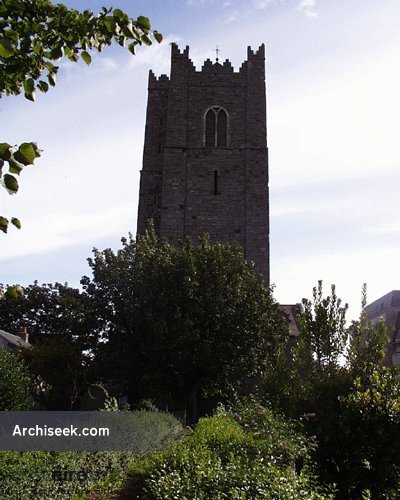


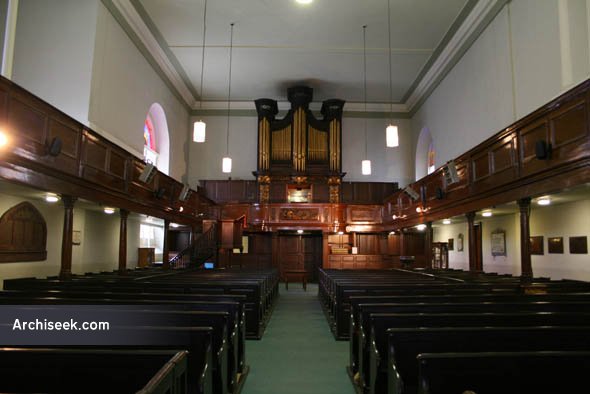
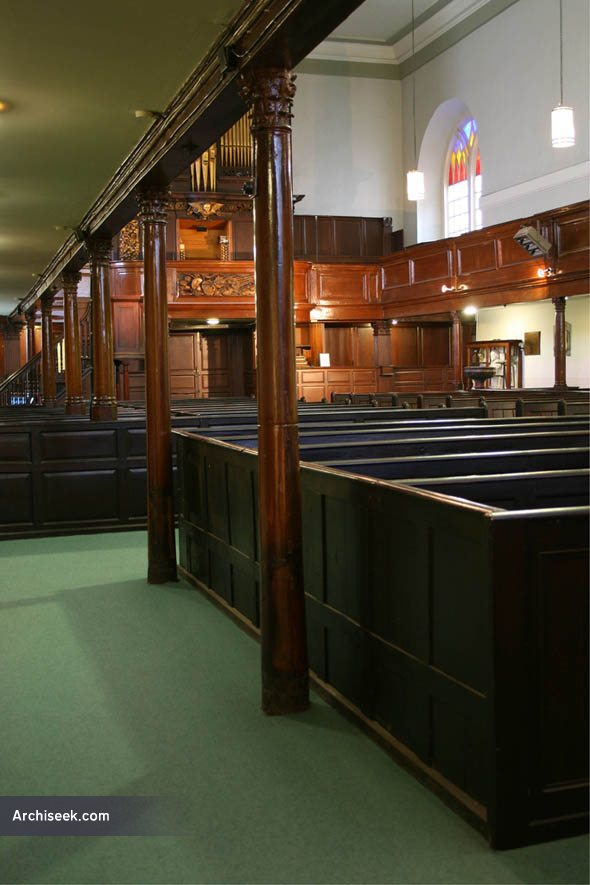
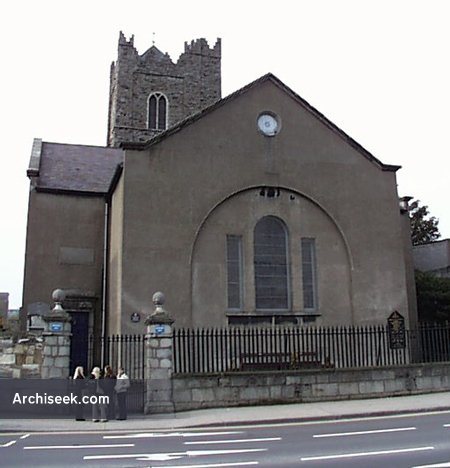
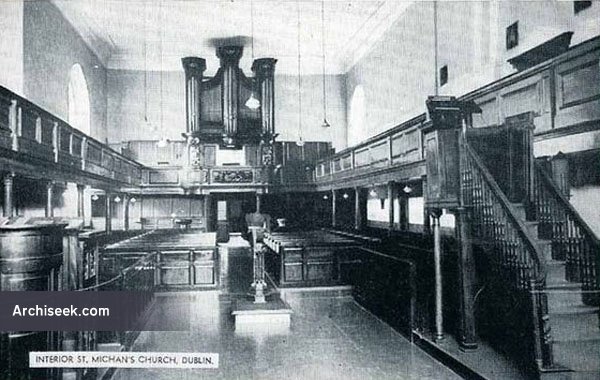

This structure dates from 1685-86 and was built on the site of an earlier structure founded by the Danes in 1095. Originally St Michan’s was built to serve the viking community that was expelled from the walled city. For almost five hundred years this was the only parish church on the northside of the Liffey. It was rebuilt when the area was redeveloped by Sir Humphry Jervis and may have been designed by Sir William Robinson.
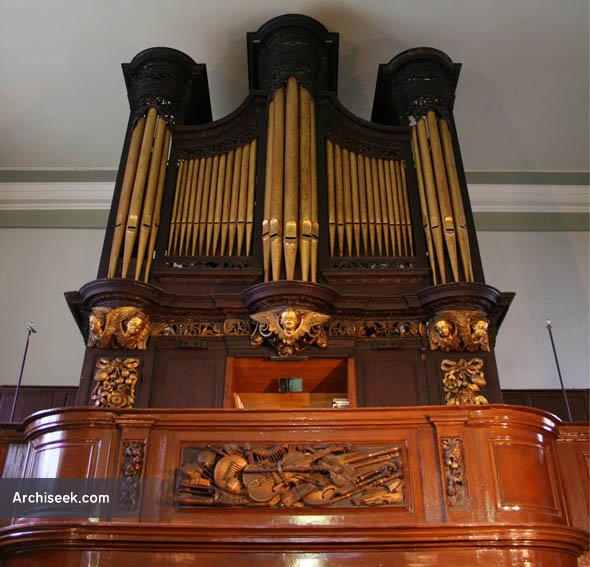
Legend has it that Handel played on the organ while composing “The Messiah” but this is untrue. Although the original organ case remains intact, the pipes were destroyed in the early 1950s when it was replaced with an organ built by Evans & Barr of Belfast. The original mechanical action was replaced by a pneumatic action whose thousands of rubber tubes have now perished, the instrument is virtually unplayable. All that remains of the original organ is some of the mechanism and the keyboard.
What the church is more famous for, is its collection of mummified bodies stored in the vaults. The Limestone in the ground keeps the air dry and helps their preservation. Many of the leaders of the 1798 Rebellion are buried in the vaults and the surrounding graveyard.
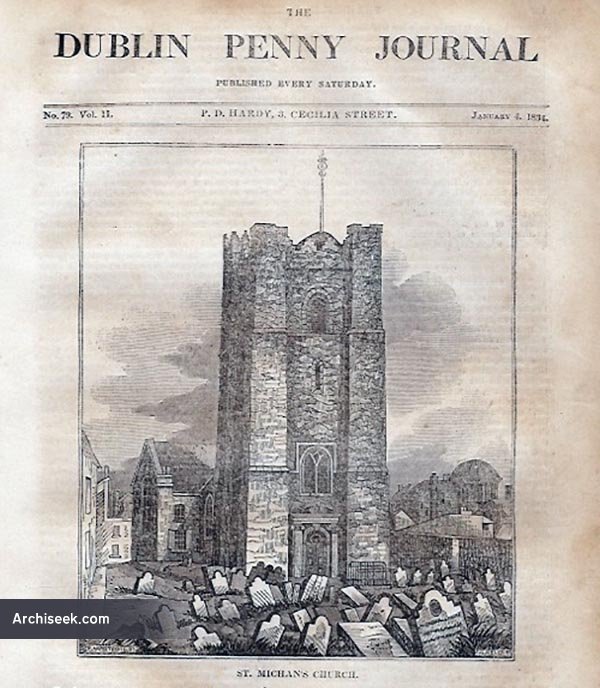
Previous to the 17th century, St. Michan’s was the only parish church in the city of Dublin, north of the Liffey. The old church was a fine building, one of the largest in the city, and furnished with a square tower, the embellishment in fashion at the period of its erection. The body of the church was taken down a few years since and the present building erected in its stead—the square tower remaining in its original state. The adjoining cemetery was for many years, a favorable burying place; the ground in its vicinity, and especially the vaults underneath the building, possessing to a remarkable degree the quality of resisting the process of corruption and decay. Bodies said to have been “deposited here some centuries since are still in such a state of preservation that their features are nearly discernible, and the bones and skin quite perfect.”
The following remarks on this local peculiarity were extracted from an article published in a periodical paper some time since, by a chemist of this city:- “The bodies of those a long time deposited, appear in all their awful solitariness, at full length, the coffins having mouldered to pieces; but from those, and even the more recently entombed, not the least cadaverous smell is discoverable ; and all the bodies exhibit a similar appearance, dry, and of a dark colour. The floor, walls and atmosphere of the vaults of St. Michan’s are perfectly dry, the flooring is even covered with dust, and the walls are composed of a stone particularly calculated to resist moisture . This combination of circumstances contributes to aid nature in rendering the atmosphere of those gloomy regions more dry than the atmosphere we enjoy. In vault are shown the remains of a nun, who died at the advanced age of 111; the body has now been thirty years in this mansion of death; and although there is scarcely a remnant of the coffin, the body is as completely preserved as if it had been embalmed, with the exception of the hair. In the same vault are to be seen the bodies of two Roman Catholic clergymen, which have been fifty years deposited here, even more perfect than the nun. In general it was evident, that the old were much better preserved than the young. A convincing proof of this was afforded in the instance of a lady who died in child-birth, and was laid in those vaults with her infant in her arms. Not long after, the infant putrefied and dropt away while the mother became like the other melancholy partners of this gloomy habitation. In the year 1798, two brothers, of the name of Sheers, were executed the same day for their high treason, and after suffering decapitation were laid together in these vaults; and, as a demonstration that this antiseptic power is to be attributed to the atmosphere peculiar to those regions, the bodies being just thrown at the entrance of the vaults, were exposed, in a great degree, to the influence of the external atmosphere, in consequence of which they shortly after totally decayed.
Published April 13, 2010 | Last Updated February 25, 2026


